Create a gs_glyph object from a static shape and its identifying
token. These prototypes form the building blocks of RGraphSpace's glyph
vocabulary (e.g. GlyphArrow).
Arguments
- shape
A two-column numeric matrix of local points in the canonical frame: column 1 is the coordinate along the edge (reference point at the origin,
+xoutward), column 2 is the lateral coordinate (+yto the left), at unit size. An empty (0-row) matrix draws nothing.- token
The
arrowTypetoken that selects this glyph:">"(vee-like) or"|"(tee-like), followed by a two-digit number (e.g.">90","|90").- name
A short human-readable name shown by
glyph_list. Defaults to the token whenNULL.- draw
How the points are interpreted:
"polyline"connects them tip-to-tail into one open line;"segments"pairs consecutive points (rows 1-2, 3-4, ...) into separate segments and requires an even number of rows;"polygon"connects them into a closed, filled outline;"circle"takes a single point as the centre, drawn at the edge'sarrow_sizediameter.- offset
Where the edge line ends, as an x position in the glyph's frame:
0(the default) runs the line to the reference point, and a negative value stops it that far back along the edge, in glyph units. Use it for open outlines, so the line stops at the outline instead of crossing it (e.g.-1for an open triangle whose base is at x = -1).- x
A
gs_glyphobject, as returned byglyph_proto()or a built-in glyph (e.g.GlyphArrow).- ...
Further
gs_glyphobjects, drawn side by side withx.- ncol
Number of glyphs per row; defaults to a single row.
- margin
Space around the glyphs, as a fraction of the page on each
- colour
Colour used to draw the glyph preview.
New glyphs
New glyphs are added as package contributions, not at runtime: add an
exported Glyph* object, built with glyph_proto(), to
the gspace-glyph-collection.R source file (see that file for the full
recipe). Tokens must be unique across all glyphs; conflicts are reported at
package load.
Examples
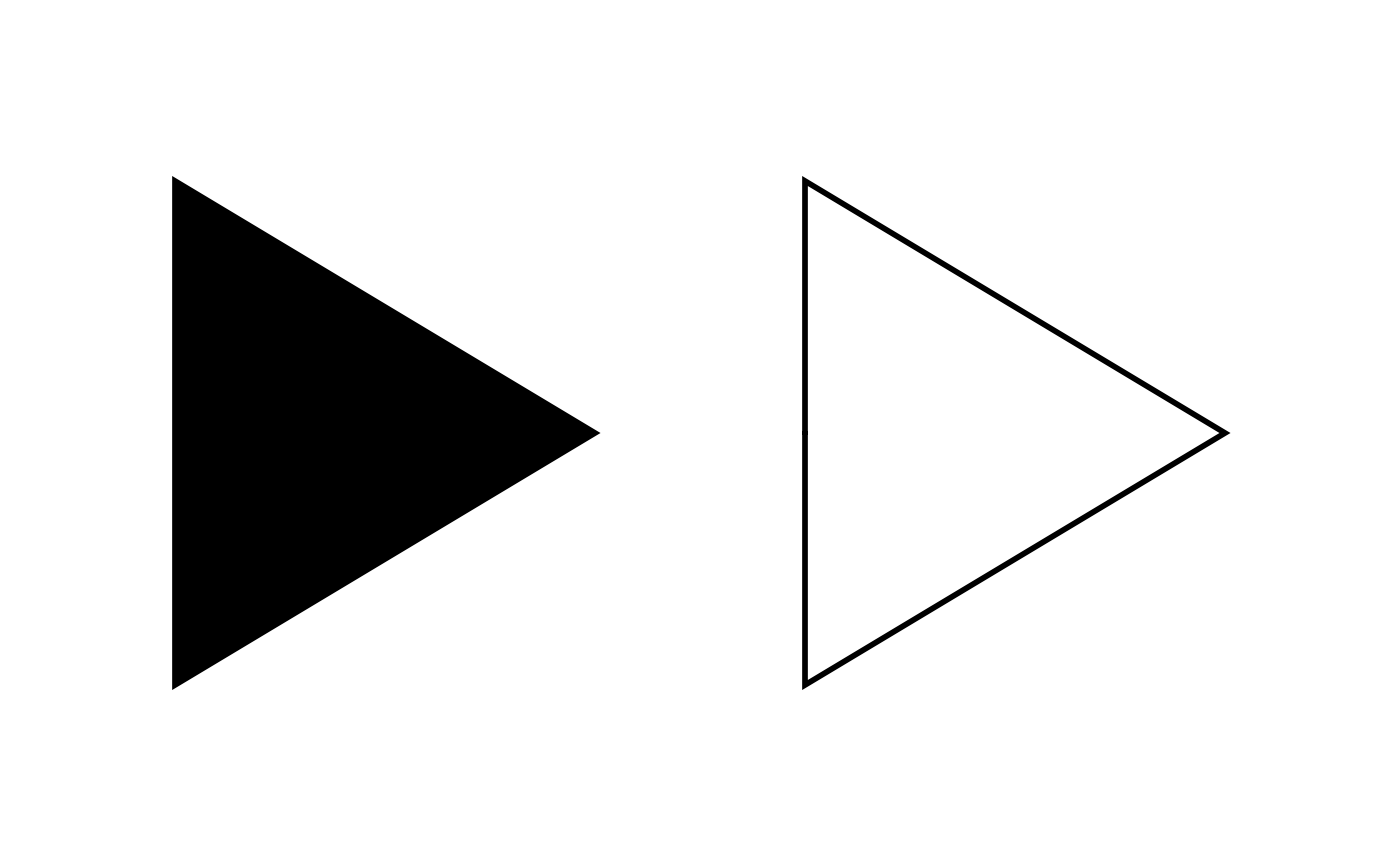
# a pair of vee-like shapes: a filled triangle (odd number) and its open
# form, the same outline as a closed polyline (next, even number)
m <- rbind(c(0, 0), c(-1, 0.6), c(-1, -0.6))
filled <- glyph_proto(m, token = ">91", draw = "polygon")
m <- rbind(c(-1, 0), c(-1, 0.6), c(0, 0), c(-1, -0.6), c(-1, 0))
open <- glyph_proto(m, token = ">92", draw = "polyline")
plot(filled, open)
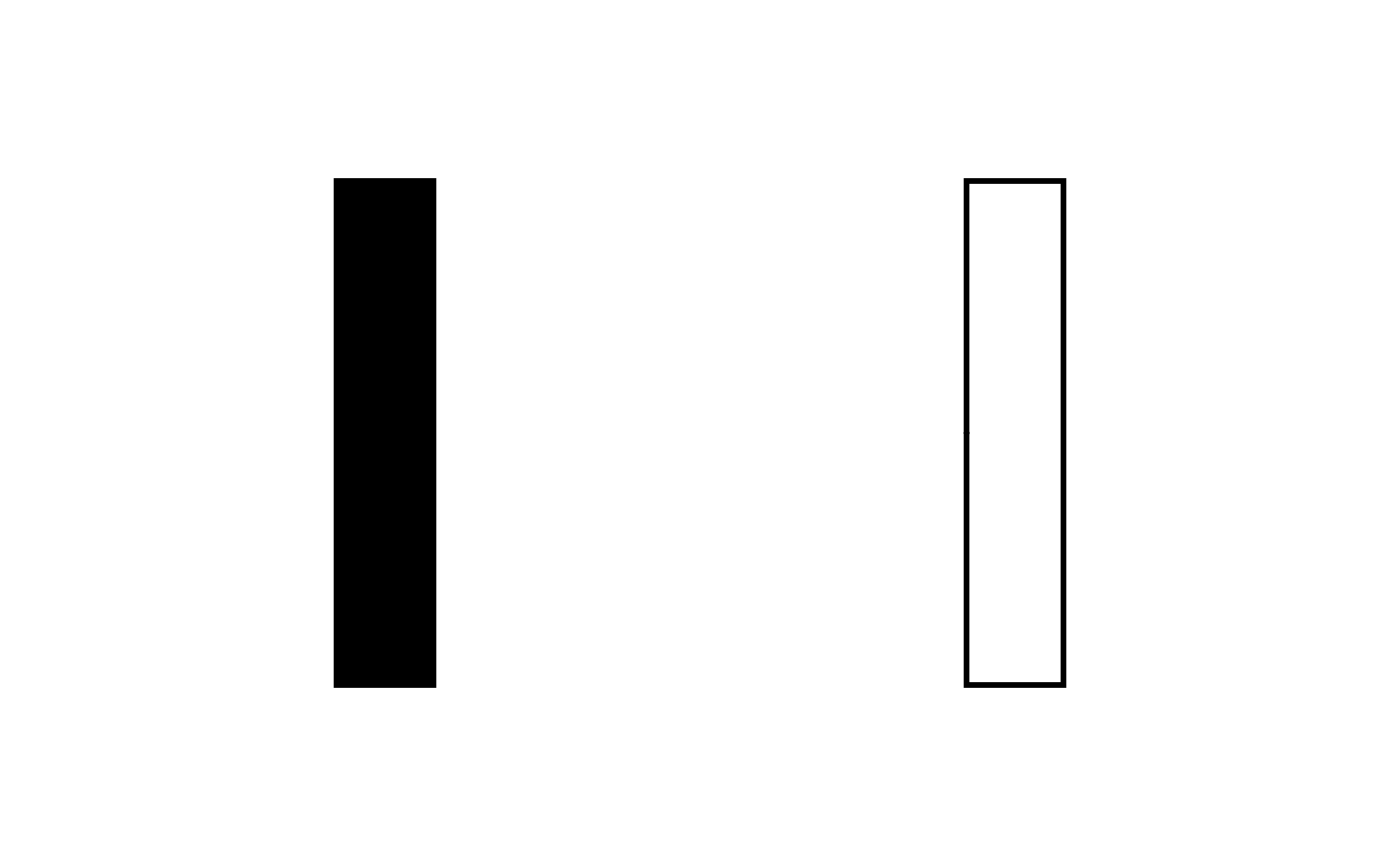
 # a pair of tee-like shapes: a filled block across the edge at the reference
# point, and its open form, the same outline as a closed polyline
m <- rbind(c(0, 0.65), c(0, -0.65), c(-0.25, -0.65), c(-0.25, 0.65))
filled <- glyph_proto(m, token = "|91", draw = "polygon")
m <- rbind(c(-0.25, 0), c(-0.25, 0.65), c(0, 0.65), c(0, -0.65),
c(-0.25, -0.65), c(-0.25, 0))
open <- glyph_proto(m, token = "|92", draw = "polyline")
plot(filled, open)
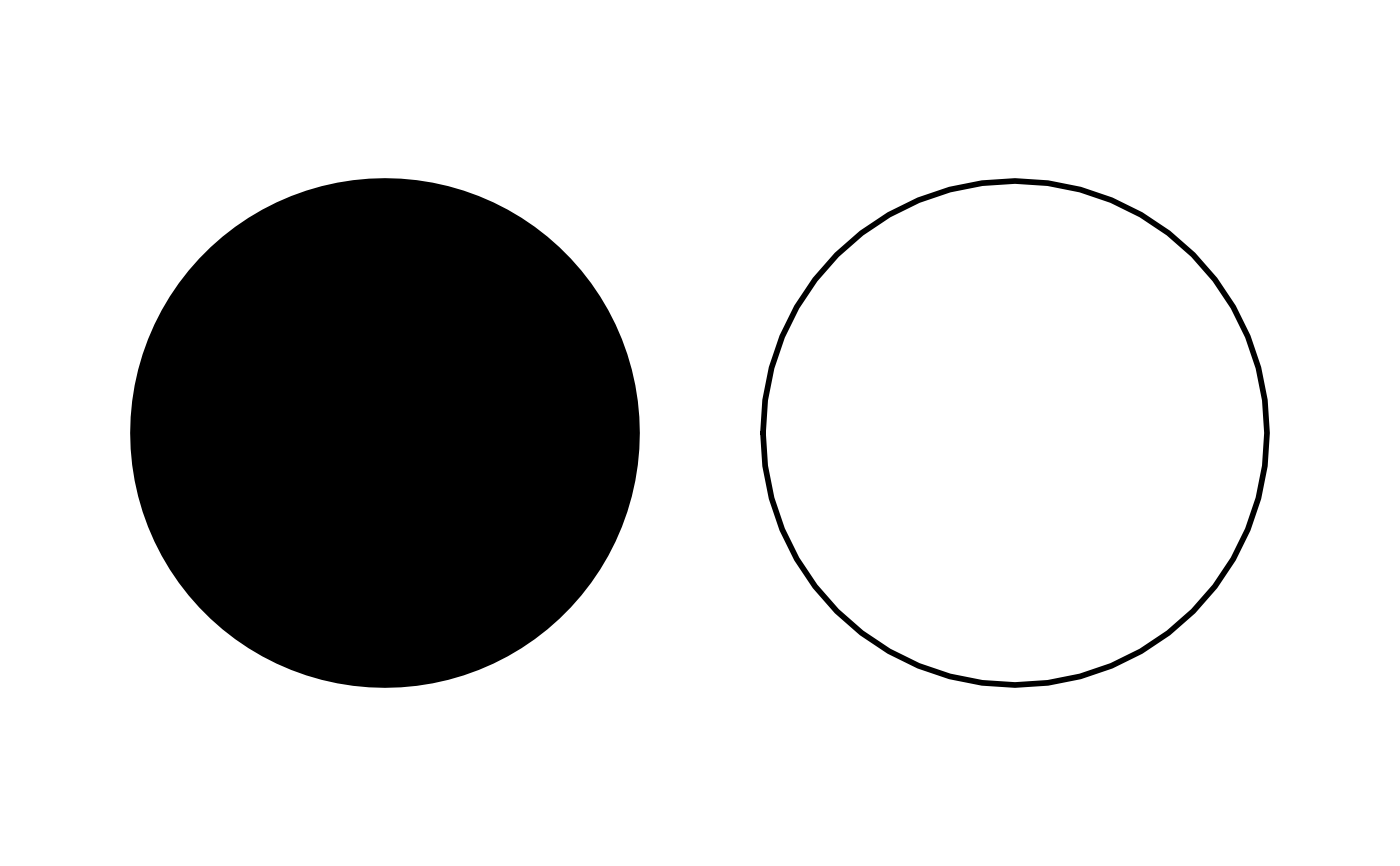
 # a pair of tee-like shapes: a circle (diameter one unit) touching the
# reference point, and its open form, a ring traced as a polyline
filled <- glyph_proto(rbind(c(-0.5, 0)), token = "|93", draw = "circle")
a <- seq(0, 2 * pi, length.out = 49)
m <- cbind(-0.5 - 0.5 * cos(a), 0.5 * sin(a))
open <- glyph_proto(m, token = "|94", draw = "polyline")
plot(filled, open)
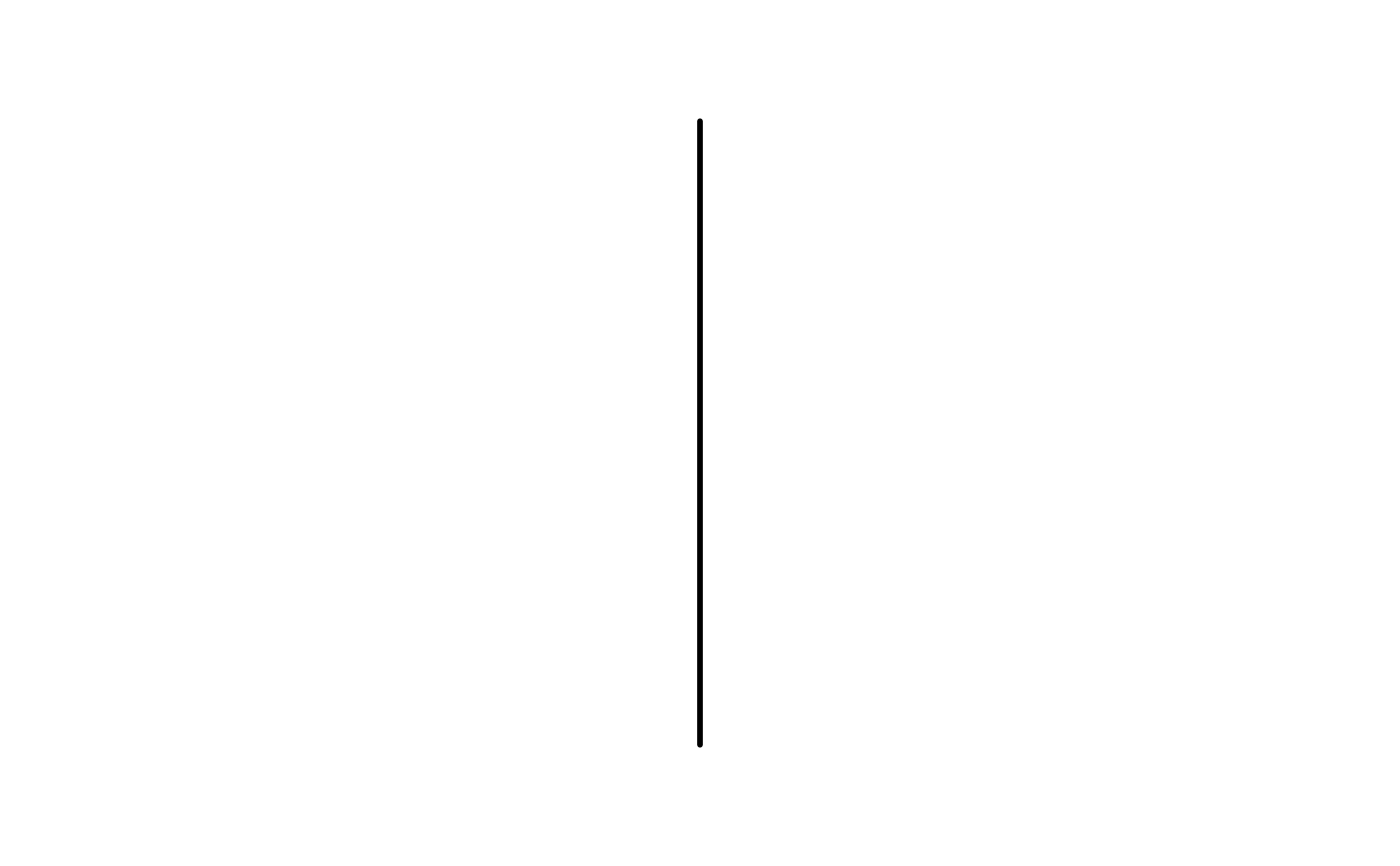
 # a single open glyph: a bar across the edge at the reference point, as
# one segment
m <- rbind(c(0, 0.65), c(0, -0.65))
glyph <- glyph_proto(m, token = "|95", draw = "segments")
plot(glyph)